Austin’s River and Lake Recreation Scene
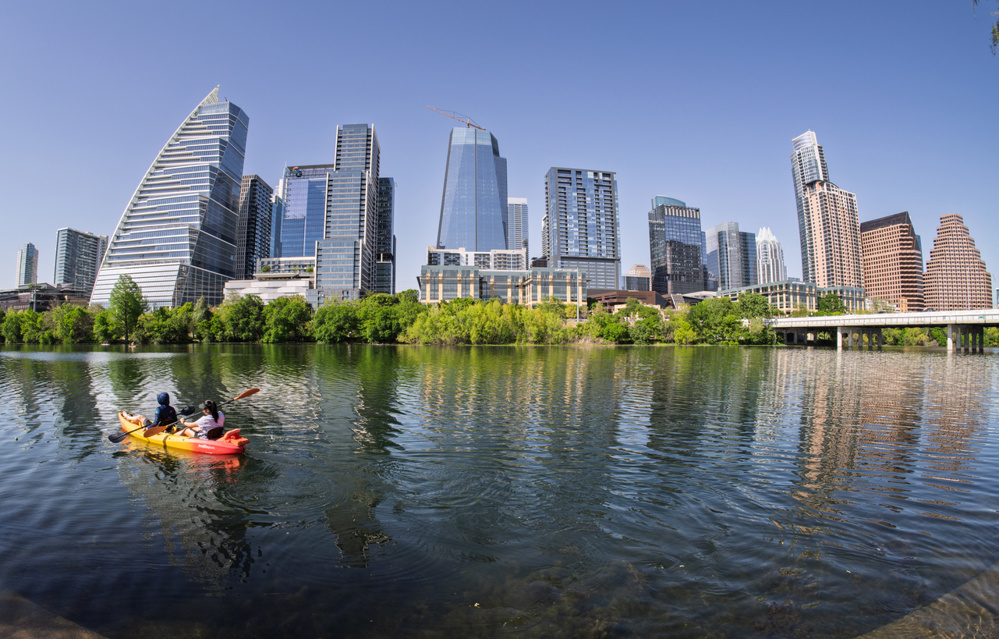
Austin’s river and lake recreation scene centers on a connected stretch of the Colorado River flowing through the city, forming Lady Bird Lake, Lake Austin, and upriver Lake Travis. These are not separate reservoirs scattered around town, but linked segments shaped by dams along the Highland Lakes system.
You can paddle calm urban waters, fish for largemouth bass, picnic along shaded trails, or launch a boat from multiple public ramps. Each lake operates under specific safety rules and access guidelines, and understanding where swimming is allowed — and where it is not — is essential before you go.
Where to Access Lady Bird Lake and Lake Austin
Lady Bird Lake offers numerous public shoreline access points and launch areas. Popular access locations include:
- Zilker Park / Austin High Boat Ramp
- Festival Beach
- Auditorium Shores
- Red Bud Isle
- Longhorn Dam area
- Texas Rowing Center and Rowing Dock (rental concessions)
There is no general entry fee for the lake itself, though parking fees may apply in certain park areas. Dogs are allowed along the shoreline and trail, but city leash rules apply in most areas.
Lake Austin access points include:
- Emma Long Metropolitan Park
- Jessica Hollis Park
- Mary Quinlan Park
- Fritz Hughes Park
- Selma Hughes Park
Unlike Lady Bird Lake, Lake Austin allows motorized boating, which affects where and how swimmers and paddlers can safely recreate.
Swimming, Fishing, and Boating: What’s Allowed Where
Lady Bird Lake:
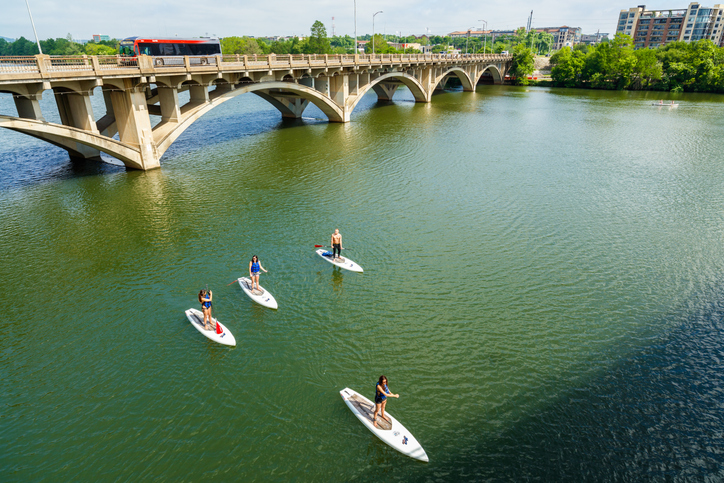
Swimming has been prohibited since 1964 and remains illegal today. The ban is enforced primarily due to safety concerns including underwater debris, strong currents from dam releases, and limited visibility. Kayaking, canoeing, and stand-up paddleboarding are permitted and extremely popular.
Lake Austin:
Swimming is allowed but not formally lifeguarded. Swimmers must use caution due to boat traffic and fluctuating water levels.
Lake Travis:
Swimming is permitted at designated parks and marinas. The lake is widely used for powerboating, sailing, and wake sports.
Fishing is allowed on all three lakes with a valid Texas Parks & Wildlife Department fishing license. Lady Bird Lake is well known for bass fishing and frequently hosts catch-and-release tournaments.
Life jackets are required for children under 13 on vessels underway, and strongly recommended for all paddlers.
Austin’s Major Lakes at a Glance
| Feature | Lady Bird Lake | Lake Austin | Lake Travis |
| Swimming Allowed? | ❌ No recreational swimming (banned since 1964) | ✅ Allowed, no lifeguards | ✅ Allowed at parks & marinas |
| Motorized Boats? | ❌ No recreational motorized boats | ✅ Yes | ✅ Yes |
| Best For | Kayaking, paddleboarding, skyline views | Boating, waterskiing, waterfront parks | Wake sports, sailing, scuba, open-water recreation |
| Water Conditions | Calm, controlled level | Moderate current & boat wakes | Large, open water with fluctuating levels |
| Fishing | Popular bass fishery | Bass, catfish | Bass, striped bass |
This side-by-side view helps visitors quickly understand which lake fits their plans before heading out.
Which Lake Is Best for You?
- Families with young kids:
Lady Bird Lake (for paddling and trails) or designated swim areas at Lake Travis parks like Mansfield Dam Park. Calm coves are safest. - Serious boaters and wake sport enthusiasts:
Lake Austin and Lake Travis offer open water and consistent motorized access. - Beginner kayakers and paddleboarders:
Lady Bird Lake remains the most protected and predictable environment. - Anglers:
Lady Bird Lake is nationally known for largemouth bass. Lake Travis offers deeper-water species including striped bass. - Scenic relaxation seekers:
Lake Travis provides expansive Hill Country views, while Lady Bird Lake offers downtown skyline scenery.
Best Kayaking and Paddleboarding Launch Points in Austin
For calm water and skyline views, Lady Bird Lake remains the most beginner-friendly option. Popular rental and launch sites include:
- Texas Rowing Center
- Rowing Dock
- Festival Beach
- Austin High Boat Ramp
Lake Austin offers longer-distance paddling routes but includes motorized traffic, making early mornings the safest and calmest times.
Lake Travis suits experienced paddlers comfortable with open water and boat wakes. Launch sites such as Mansfield Dam Park and Windy Point Park provide access to scenic Hill Country coves.
Barton Creek, when water levels allow, offers spring-fed paddling and swimming opportunities near Zilker Park, though flow varies seasonally.
Top Lakefront Parks for Picnics and Trail Access
Austin’s lakefront parks combine shoreline recreation with trail connectivity:
- Zilker Metropolitan Park – Access to Barton Creek and Lady Bird Lake, plus trail connections.
- Emma Long Metropolitan Park – Designated swim areas, boat ramps, and reservable picnic sites.
- Jessica Hollis Park (Lake Austin) – Sandy shoreline and reservable picnic tables.
- Brushy Creek Lake Park (Cedar Park) – 90-acre park with paved trails and fishing.
- Mueller Lake Park – Urban lake with loop trails and Sunday farmers market (Texas Farmers’ Market at Mueller).
Most parks operate daily with posted hours and may charge seasonal entry or parking fees.
When to Visit Austin Lakes by Season and Activity
Spring: Mild temperatures (70s–80s°F), stable water levels, and wildflowers make it ideal for paddling and shoreline picnics.
Summer: Peak boating and swimming season. Early mornings are safest due to heat and heavy boat traffic. Reservations are recommended for holiday weekends.
Fall: Cooler mornings and reduced crowds. Excellent for kayaking and fishing.
Winter: Quieter conditions with mild Central Texas winters. Fishing remains active year-round, though recreational boating declines.
Lake levels fluctuate depending on rainfall and drought conditions. Lake Travis in particular can drop significantly during prolonged dry periods, affecting boat ramp access.
Why Lake Travis Water Levels Matter
Lake Travis is part of the Highland Lakes system and serves as a key water supply reservoir. During drought periods, water levels can drop dramatically — sometimes exposing boat ramps, reducing marina access, and limiting certain recreation areas.
When the lake falls below conservation pool level (681 feet above mean sea level), boat ramp closures become common, and shoreline distances expand significantly. Conversely, after heavy rains, levels can rise quickly, reopening facilities and improving boating conditions.
Before visiting Lake Travis, check current lake elevation reports from the Lower Colorado River Authority (LCRA) to confirm ramp and marina accessibility.
Water Quality Updates and Blue-Green Algae
Austin and the Lower Colorado River Authority (LCRA) monitor water quality throughout the Highland Lakes system. After heavy rain, elevated bacteria levels can temporarily affect recreation.
Harmful blue-green algae (cyanobacteria) blooms have periodically been detected in Lady Bird Lake and Lake Austin in recent years. These blooms are especially dangerous for dogs. The City of Austin publishes testing updates when conditions warrant public advisories.
Checking recent water quality reports before swimming or allowing pets near shoreline water is strongly recommended.
Lake Safety Essentials in Central Texas Heat
Austin’s lakes are beautiful — but conditions can turn serious quickly.
Heat Exhaustion & Heat Stroke:
Summer temperatures regularly exceed 95–100°F. Drink water frequently, wear sun protection, and avoid midday exertion. Alcohol significantly increases dehydration risk.
Dam Release Currents:
Water releases from Mansfield Dam (Lake Travis) and Tom Miller Dam (Lake Austin) can create sudden current changes downstream. Always check LCRA release schedules before paddling long distances.
Boat Wake Hazards:
Lake Austin and Lake Travis experience heavy wake traffic, especially on weekends. Swimmers and paddleboarders should stay near shore or in designated areas to avoid collisions and rough water.
Life Jackets:
Texas law requires children under 13 to wear U.S. Coast Guard–approved life jackets while vessels are underway. Wearing one is strongly recommended for all paddlers.
Lake Permits, Speed Limits, and No-Wake Zones
Recreation on Austin’s lakes is regulated by a mix of city, county, and state agencies.
Key guidelines include:
- Texas Parks & Wildlife boat registration required for motorized vessels.
- No-wake zones near marinas, docks, and designated shoreline areas.
- Dock construction and modification on Lake Austin require permitting and inspection.
- Commercial operators must carry liability insurance and meet safety certification requirements.
Rules vary slightly between Lady Bird Lake (no motorized recreational boating), Lake Austin, and Lake Travis.
Tubing Near Austin: San Marcos and Guadalupe Rivers
While Austin’s lakes dominate local recreation, many residents also include river tubing in their summer tradition.
San Marcos River (San Marcos, ~45 minutes south):
Spring-fed and consistently cool (around 72°F year-round), the San Marcos River offers gentle current tubing ideal for relaxed floats. The City of San Marcos regulates cooler sizes and disposable containers.
Guadalupe River (New Braunfels, ~1 hour south):
The Guadalupe provides longer tubing routes with variable flow depending on dam releases and rainfall. Sections below Canyon Dam are popular for family-friendly floats, while other stretches offer livelier current.
Tubing outfitters operate seasonally and provide rentals and shuttle services. Always check river flow conditions before planning your trip.
Wildlife Watching Along the Shore
Austin’s lakes provide habitat for diverse wildlife.
Common sightings include:
- Great blue herons
- Yellow-crowned night herons
- Belted kingfishers
- Migratory ducks (fall through spring)
- Red-eared slider turtles
Anglers frequently catch largemouth bass, catfish, and sunfish species. Lady Bird Lake has produced multiple recognized state-record fish over time, reinforcing its reputation among local anglers.
Paddling from Lady Bird Lake Toward Lake Austin
Lady Bird Lake and Lake Austin are connected by the Colorado River, with Tom Miller Dam separating the two. Paddlers cannot simply pass through the dam; portage is required and not commonly undertaken due to safety and logistical constraints.
The stretch from eastern Lady Bird Lake to the dam spans several miles and offers a scenic urban-to-natural transition. Lady Bird Lake prohibits recreational motorized boat traffic, creating a quieter paddling environment compared to Lake Austin.