Holiday Then vs. Now: Steamboat-Era Traditions Vs Modern Celebrations
You'd barely recognize Christmas on a steamboat compared to today's celebrations. While you now buy ornaments and gifts online, steamboat-era families foraged forests for pinecones and evergreen branches. Crafted decorations from corn husks, and strung popcorn garlands by hand. Instead of scrolling through Netflix, passengers gathered in grand saloons for parlor games and charades.
Steamboats democratized Christmas by delivering 5,000 trees per voyage to communities beyond wealthy households. Newspaper ads began transforming intimate handcrafted exchanges into commercial shopping events that shaped your modern holiday traditions.
How Steamboat-Era Holiday Traditions Shaped Modern Christmas
After the Civil War, Christmas trees transformed from a regional curiosity into America's most recognizable holiday symbol, and steamboats made it possible. You'll find this commercial shipping heritage began when schooners hauled 40,000 balsam firs from Maine to Boston, proving families would pay for holiday traditions.
Captain Herman Schuenemann pioneered direct sales at Chicago's Clark Street Bridge, connecting rural timber regions with urban waterfront communities through Lake Michigan routes. The Milwaukee shipyards launched the Rouse Simmons in 1868, a vessel that would become synonymous with the Christmas tree trade for decades.
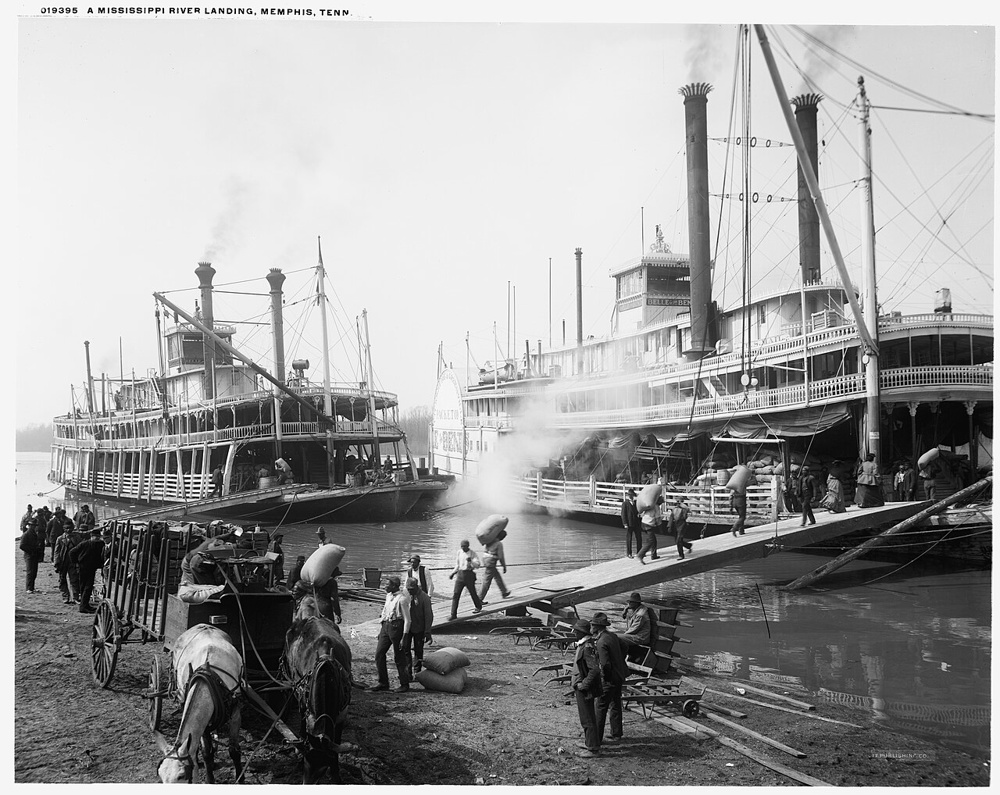
These maritime merchants didn't just deliver trees—they democratized Christmas itself. You'd see vessels like the Rouse Simmons carrying 5,000 trees per voyage, making celebrations accessible beyond wealthy households. Schuenemann even distributed trees to poor families, establishing charity as integral to holiday commerce. Today's Christmas tree lots trace directly to those dock-based markets at Faneuil Hall and Chicago's waterfront.
Why Steamboat Families Decorated With Foraged Natural Materials
During the steamboat era, families turned to forests and fields for holiday decorations because purchased ornaments remained financially out of reach for most households. You’ll find that limited material availability shaped how communities decorated.
They relied on what nature provided locally—pinecones, evergreen branches, berries, and dried flowers became the centerpieces of celebration. These thrifty decoration choices weren't just economical; they reflected practical resourcefulness. Families crafted garlands from native greenery, strung popcorn and cranberries, and fashioned ornaments from corn husks and dried fruit.
This foraging tradition created meaningful family rituals. You'd venture outdoors together, selecting perfect specimens while teaching children plant identification. The result was authentically personal décor that couldn't be replicated—each home's decorations told unique stories about local landscapes and family traditions.
From Handmade Toys to Manufactured Gifts: The Steamboat-Era Shift
Just as families foraged for natural decorations, they also crafted toys and gifts by hand throughout most of the steamboat era. You'd find whittled wooden dolls, sewn rag animals, and simple pull toys emerging from workshops and parlors. Handmade toy production dominated early 1800s gift-giving, with each creation reflecting personal skill and available materials.
However, the steamboat's role in expanding commerce gradually transformed this tradition. By the mid-to-late 1800s, you'd notice cast iron toys, manufactured dolls, and factory-made playthings appearing in merchant catalogs. Mass produced toy commercialization accelerated as steamboats delivered goods to previously isolated communities. What once required hours of carving or stitching could now be purchased from traveling salesmen or general stores.
The steamboat's economic impact extended beyond just transporting finished goods. Shipyards and machine shops in river cities created new manufacturing capabilities that would eventually produce consumer items. Surplus crops quickly and easily shipped off to distant markets meant families had more disposable income for purchasing gifts rather than relying solely on homemade items.
Riverboats and Parlor Games on Christmas Eve
Christmas Eve aboard steamboats transformed parlor games from simple home entertainments into social spectacles shared among passengers and crew. You'd find elaborate charades, card games, and musical chairs filling the grand saloons during evening celebrations. These parlor game activities created unique bonding opportunities among strangers traveling together during the holiday season.
Today's riverboat Christmas cruises attempt recreating this atmosphere through organized activities. However, modern passengers typically prefer observing shore-based bonfire traditions rather than participating in traditional parlor games that once dominated steamboat social life. The Frisbie Calliope played Christmas carols along the riverfront, filling the air with festive melodies that echoed across the water.
What Steamboat-Era Families Ate and Drank at Christmas
While travelers aboard steamboats enjoyed festive parlor games, they anticipated Christmas dinner with equal enthusiasm—a meal that rivaled the finest hotel dining rooms of the era. You'd find roasted turkey or goose as your centerpiece protein, accompanied by oyster dressing that reflected regional steamboat era differences along coastal routes.
Seasonal ingredient importance determined what appeared on your table—Virginians enjoyed wild ducks and rockfish, while Mississippi River travelers savored different local specialties. You'd finish your feast with plum pudding drenched in brandy sauce, mince pie, and perhaps eggnog pie, toasting the season with festive wassail. The table might feature a low dish of ferns or scarlet geraniums mingled with white carnations as a centerpiece decoration.
How Christmas Tree Customs Changed From the 1800s to Today
If you'd decorated a Christmas tree in the 1850s, you'd have adorned it with cookies, apples, and nuts that children eagerly plucked off and ate throughout the season. You'd have fastened candles to boughs for illumination, risking fire with every gathering.
Ornament symbolism centered on edible treats and handcrafted paper decorations from Germany and Austria. Traditional decorations also included colored paper nets, golden apples, walnuts, and a tinsel star adorning the top. Electricity's impact revolutionized everything in 1882 when Edward Johnson introduced electric lights, eliminating dangerous open flames.
You'd have witnessed F.W. Woolworth importing millions of German glass baubles to American markets. They transformed trees from temporary edible displays to permanent ornamental showcases. Mark Carr's 1851 New York retail lot commercialized tree availability. Royal endorsement through Queen Victoria's illustrated celebrations converted this German immigrant custom into an essential British and American tradition.
Create your own project calendar to keep tasks and deadlines clearly organized.
When Newspaper Marketing Replaced Steamboat-Era Handcrafted Gifts
Handcrafted ornaments weren't the only tradition undergoing transformation during the late 19th century—the gifts beneath those trees changed just as dramatically. You'd witness the transition from handmade to store-bought gifts accelerating through newspaper pages, where merchants created early holiday gift guides promoting everything from jewelry to pocket pistols.
By the 1880s, newspapers became shopping catalogs:
- Targeted Marketing Emerged - An 1770 New York Journal ad pitched "proper Presents to and from Ladies and Gentlemen," segmenting audiences by class
- Promotional Tactics Developed - The 1895 Los Angeles Herald offered free turkeys with $40 purchases
- Product Lines Expanded - Chapman's Pharmacy filled the 1896 Vermont Standard with "valuable" and "practical" gift suggestions
Until the Civil War, Christmas mentions in newspapers consisted primarily of fictional stories or religious-themed articles rather than commercial promotions. These advertisements fundamentally transformed Christmas from intimate, handcrafted exchanges into commercial shopping events.
Celtic Winter Fires to Louisiana Steamboat-Era Bonfire Traditions
The commercialization of gift-giving transformed Victorian parlors, but along Louisiana's Mississippi River, French and German settlers were adapting far older traditions to American soil. You'd find these colonists building massive cone-shaped bonfires on the batture between levee and water, channeling ancient Celtic Samhain practices into Christmas Eve celebrations.
Expanding ritual significance meant livestock purification ceremonies evolved into community gatherings featuring gumbo suppers and eggnog. Evolving material construction showed progression from simple cane reeds wired around center poles to elaborate structures. It incorporated scrap wood and rubber tires during the steamboat era.
Young boys competed in games targeting flags atop these burning monuments, transforming winter solstice sun-worship into uniquely Louisiana riverside spectacles. Riverboat crews, drawn by the spectacular flames along the Mississippi, would join the riverside celebrations, creating spontaneous gatherings.
How Modern Steamboats Revived Christmas Bonfire Tourism
Centuries after those first French and German settlers lit their riverside fires, a different kind of revival breathed new life into the bonfire tradition. While historical riverboat crews stopped at bonfires incidentally during the 1800s, the relationship between steamboats and bonfire attendance didn't create the modern resurgence you see today.
What Actually Revived Bonfire Tourism:
- Media coverage and press attention beginning in the 1980s sparked widespread interest
- Tour buses and motor coaches became the primary transportation, with Gray Line Tours offering dedicated bonfire viewing excursions
- Motor homes and private automobiles allowed families to experience the tradition independently
Steamboat tourism patterns played a minimal role in this revival. Today's bonfire boat tours supplement—rather than drive—the celebration's popularity along Louisiana's riverbanks. The bonfires concentrate heavily in St. James Parish, where as many as 100 or more structures light up communities like Gramercy, Lutcher, and Paulina each Christmas Eve.
What We Traded When Mass Production Replaced Steamboat-Era Charm
While steamboats delivered Christmas trees to eager families along riverbanks and lakefront docks, they carried something beyond cargo—they transported tradition itself. You've gained convenience through modernized distribution networks. However, you've lost the community gatherings at Chicago's Clark Street Bridge where Captain Schuenemann sold trees directly to families.
The ceremonial November voyages that defined holiday preparation became museum exhibits. Maritime heritage transformed from active livelihood into commemorative ceremonies, leaving you with efficiency but diminished cultural connection. The bustling outdoor dockside markets where families performed their annual ritual of selecting trees have vanished completely.
Conclusion
The steamboat didn’t invent Christmas, and it didn’t single-handedly transform every tradition. But it helped build the bridge between two versions of the holiday: the one you gathered from the land and made at home, and the one you could expect to arrive—reliably, repeatedly, with a price tag attached. Christmas became a national season when it gained infrastructure. And once a holiday has infrastructure, it doesn’t disappear—it just keeps evolving.